Wood Laser Engraving Explained: A UK Buyer's Guide
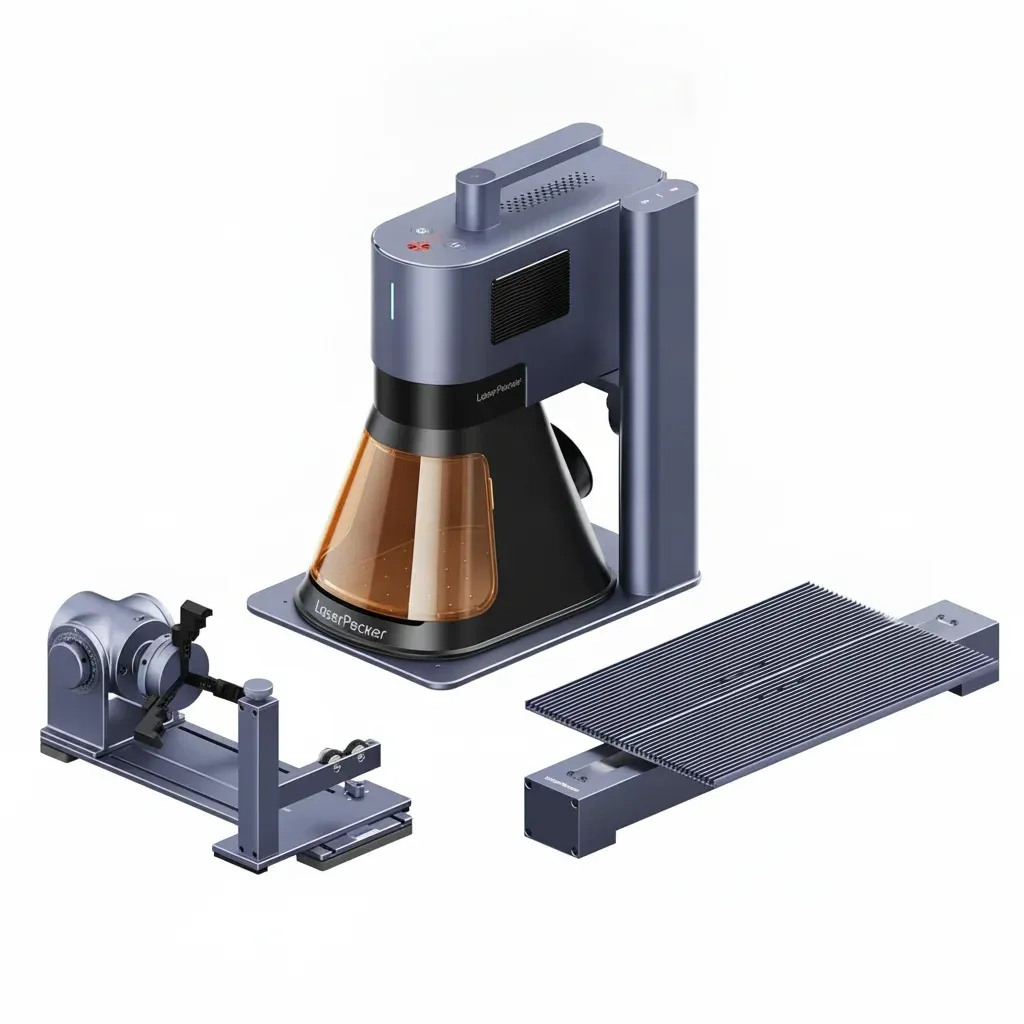
TL;DR: Wood laser engraving is a highly precise thermal process that utilises focused light—typically from a diode or CO2 laser—to vaporise timber surfaces and create permanent, high-contrast designs. Based on our testing at Arpro Lasers, achieving commercial-grade results requires matching the correct laser wavelength (450nm) with suitable timber species like European oak or laser-safe birch plywood, whilst strictly adhering to UK COSHH regulations for fume extraction.
Wood laser engraving is the thermal subtraction process of using a concentrated laser beam to vaporise the surface of timber, creating permanent, high-contrast markings. Furthermore, transforming raw timber into precision-marked signage, bespoke furniture pieces, or intricate craftwork requires more than just a passing interest in workshop tools. It demands a solid understanding of material density, thermal dynamics, and strict UK safety compliance. For professional tradespeople and serious DIY enthusiasts looking to scale their capabilities, mastering this interaction between concentrated light and natural wood grain is exactly what separates amateur burns from commercial-grade finishing.
Navigating the hardware options and safety regulations in the UK market can initially feel complex. However, with variables ranging from resin content in birch plywood to the strict local requirements for workshop fume extraction, investing in the right equipment is critical. Based on our extensive testing at Arpro Lasers, we have spent years configuring and pushing laser workstations to their limits across various timber species to understand exactly what works best on British workbenches.
Key Takeaways
- Technology Match: Diode lasers are the optimal choice for wood engraving, whilst fibre lasers are reserved for metals. Consequently, dual-technology machines offer complete workshop versatility.
- Material Selection: Hardwoods like oak and walnut yield crisp, high-contrast results, whereas resin-heavy softwoods require careful settings to prevent excessive charring.
- Legal Compliance: UK workshops must adhere to COSHH regulations regarding wood dust and laser fumes, making integrated air purification systems absolutely essential.
- Hardware Scalability: Features like rotary extensions and sliding beds are necessary for processing large signage or cylindrical items like wooden dowels and tool handles.
How does wood laser engraving work?
Fundamentally, wood laser engraving is a thermal subtraction process. When a focused laser beam hits the surface of a wooden workpiece, the intense heat instantly vaporises the moisture, cellulose, and lignin. Subsequently, this controlled burning creates a cavity and darkens the surrounding material, resulting in high-contrast markings. The depth and colour of the burn depend entirely on the speed of the laser head, the power output of the beam, and the inherent properties of the timber.
Understanding the laser source is your first technical hurdle. Importantly, not all light frequencies interact with organic materials in the same way. If you are setting up a workshop for mixed materials, you need to know which module to fire up. For a deep dive into the specific mechanics of visible light lasers, read our Diode Laser Engraver Explained: A UK Buyer's Guide.
Can you use a fibre laser to engrave wood?
A frequent misconception among new workshop owners is that a higher-priced fibre laser will automatically engrave all materials better. According to our engineering team, this is scientifically incorrect. Fibre lasers operate at a wavelength of 1064nm, which passes straight through transparent or organic materials like wood, glass, and clear acrylic without leaving a mark—or worse, causes uncontrolled internal burning.
Therefore, for wood laser engraving, you require a diode laser (operating around 450nm) or a CO2 laser. Diode modules are highly efficient at vaporising organic matter. Conversely, if your project involves embedding brass inlays into an oak presentation box, you would then need a fibre laser to mark the metal components. You can explore the exact applications of the 1064nm wavelength in our Fiber Laser For Engraving Explained: A UK Buyer's Guide.
Ultimately, this distinct division in material capability is exactly why dual-technology workstations, which combine both a high-precision diode and a 20W fibre laser in one chassis, have become the gold standard for UK makers.
What is the best wood for laser engraving?
Wood is not a uniform canvas; rather, it is a biological structure composed of earlywood (spring growth) and latewood (summer growth). The varying densities between these growth rings dictate how the laser interacts with the surface. Based on our extensive material testing, achieving commercial-grade results requires matching your project to the correct timber species.
Which hardwoods engrave best?
Hardwoods generally offer a tighter grain structure, leading to sharper engraving lines and consistent depth. When the laser hits dense latewood, it burns cleanly rather than melting away the surrounding material.
- European Oak: A staple in UK joinery. Oak engraves beautifully, producing a dark, rich brown contrast. Although its dense nature requires slightly higher power or slower speeds, the results are exceptionally durable, making it ideal for outdoor signage.
- Walnut: While naturally dark, walnut requires careful power modulation to ensure the engraved design remains visible against the unburnt background. Nevertheless, it is highly favoured for premium bespoke furniture tags and presentation cases.
- Cherry: Often cited in our Arpro Lasers workshop tests as the ultimate engraving wood. Cherry possesses a fine, uniform grain and low resin content. Consequently, it burns to a deep reddish-brown, offering stunning contrast with minimal edge charring.
Can you laser engrave plywood and softwood?
Softwoods are less dense and often contain higher levels of sap and resin. When heated, this resin can boil and cause smoke staining (scorch marks) around the edges of the engraving. Therefore, extra care is required.
- Birch Plywood (Laser Ply): The workhorse of the UK craft industry. Standard exterior plywood often contains exterior-grade glues (like WBP) that block laser beams and emit highly toxic fumes. You must source specific 'laser-safe' interior birch ply. When selected correctly, it cuts cleanly and engraves with excellent contrast.
- Pine: Highly resinous with stark differences between the soft earlywood and hard latewood. Engraving pine often results in a ribbed texture, as the laser vaporises the soft wood much deeper than the hard grain.
For an exhaustive breakdown of sourcing, preparing, and finishing different timber species locally, consult The Ultimate Guide to Laser Engraved Wood in the UK.
What are the UK safety regulations for laser engraving wood?
Operating a laser engraver in a British workshop is not simply a matter of plugging the machine into the mains. Wood laser engraving generates particulate matter (wood dust) and volatile organic compounds (VOCs) from vaporised resins and glues. Therefore, compliance with safety standards is non-negotiable for professional setups, site workers, and educational environments.
Do you need fume extraction for wood laser engraving?
The Control of Substances Hazardous to Health (COSHH) regulations legally mandate that employers and workshop owners must prevent or adequately control exposure to wood dust. Because laser engraving wood essentially creates microscopic smoke particulates, adequate ventilation is critical.
"Exposure to wood dust can cause asthma, dermatitis, and nasal cancer."
According to strict UK Health and Safety Executive (HSE) guidelines, relying solely on an open window is entirely insufficient. Based on our professional experience outfitting workshops across the UK, investing in a dedicated, multi-stage air purification system is the only reliable way to capture these hazardous emissions and maintain a legally compliant, safe working environment.
Ready to upgrade your workshop with Arpro Lasers?
Explore The LP5 — £5997.50